Evidence Packs
How TrialStack packages evidence, templates, media, and history into reviewable assets.
Package evidence for review
flowchart LR
    Content[Structured content] --> Pack[Evidence pack]
    Media[Supporting media] --> Pack
    Pack --> Review[Review]
Evidence packs combine structured content, supporting media, and version history into a package that teams can review and evolve over time.
In the product
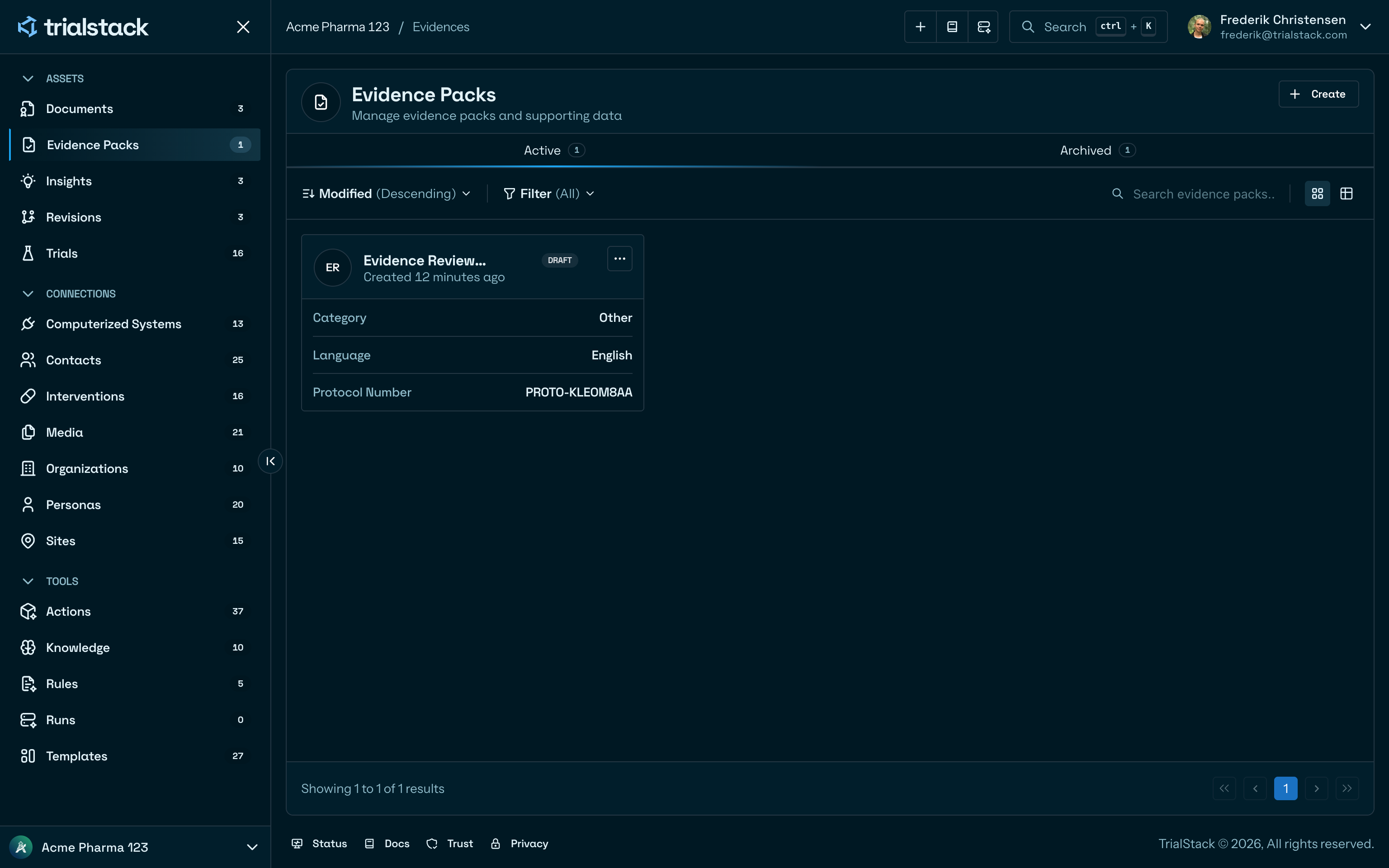
The list view keeps the pack title, category, language, and protocol number visible so reviewers can identify the right package before opening it.
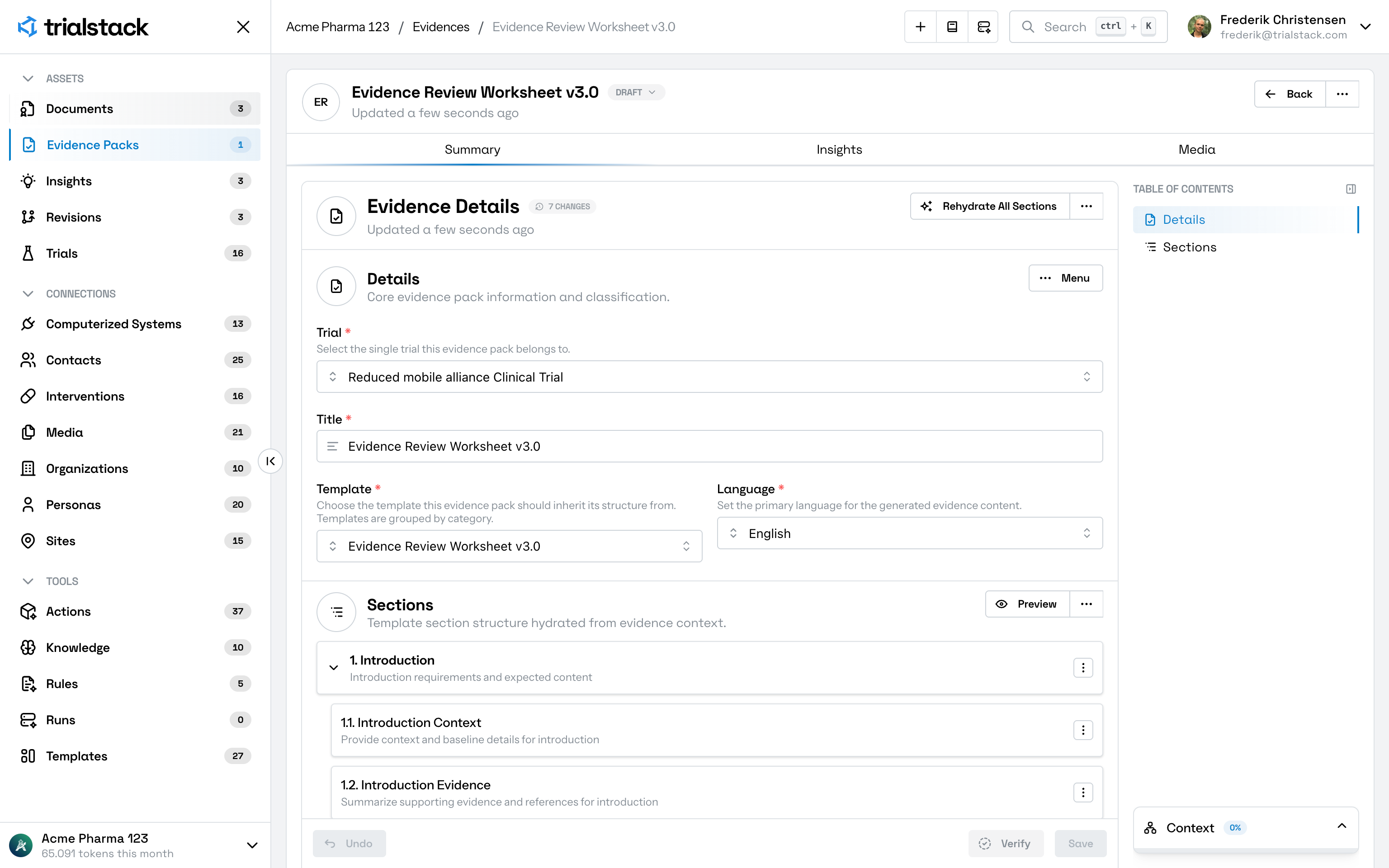
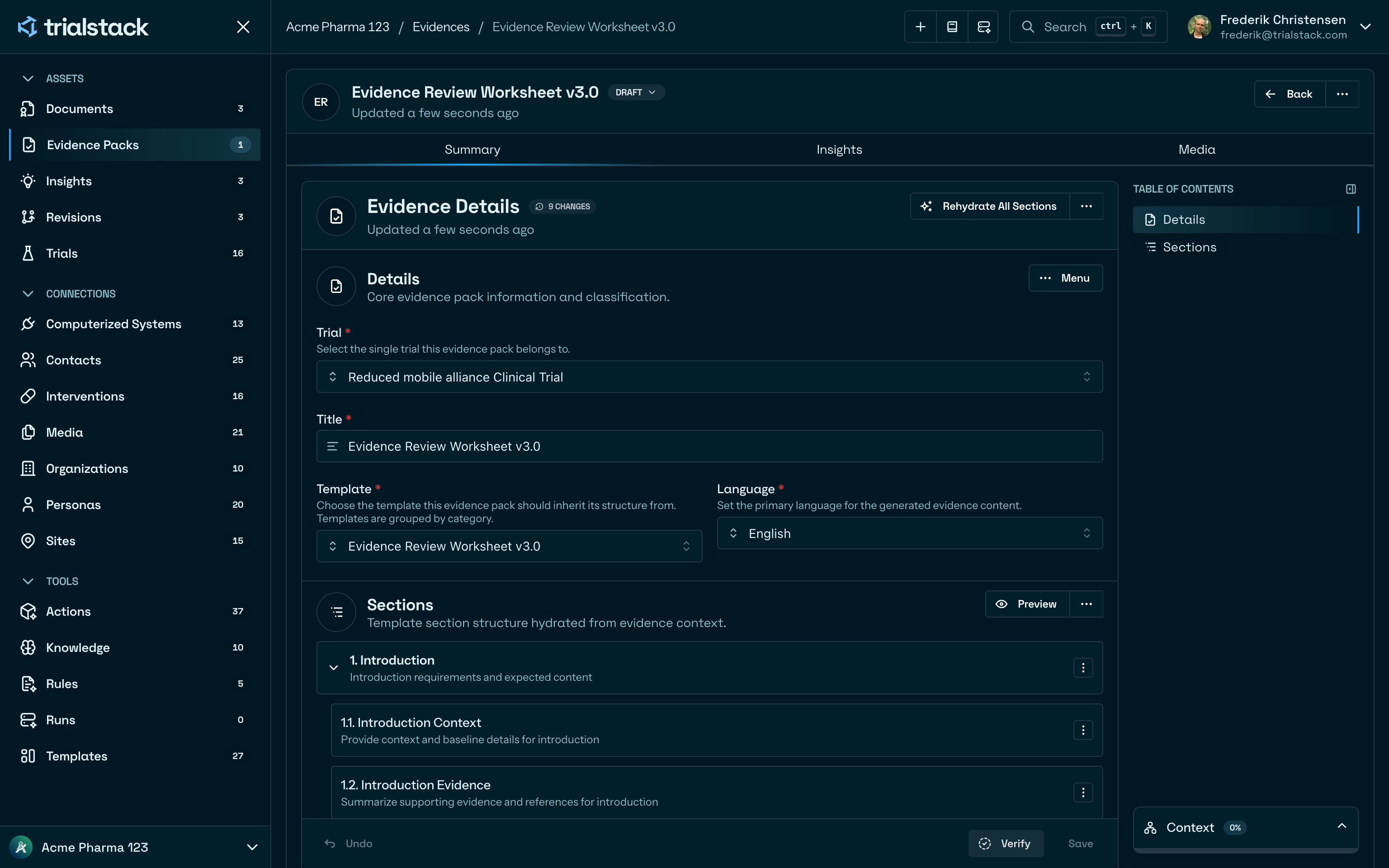
The main evidence pack page keeps the record details and the sectioned package body together on the Summary tab.
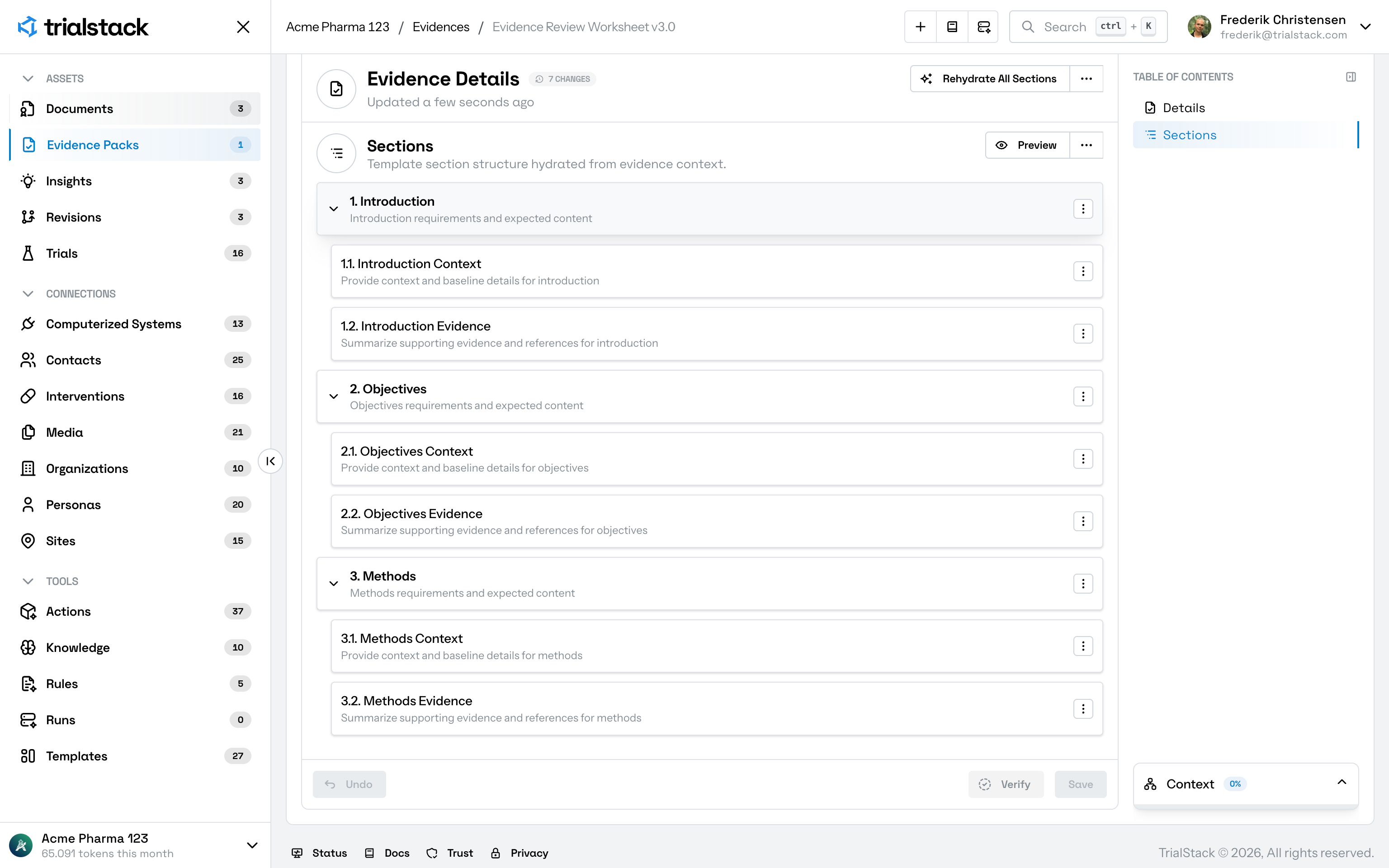
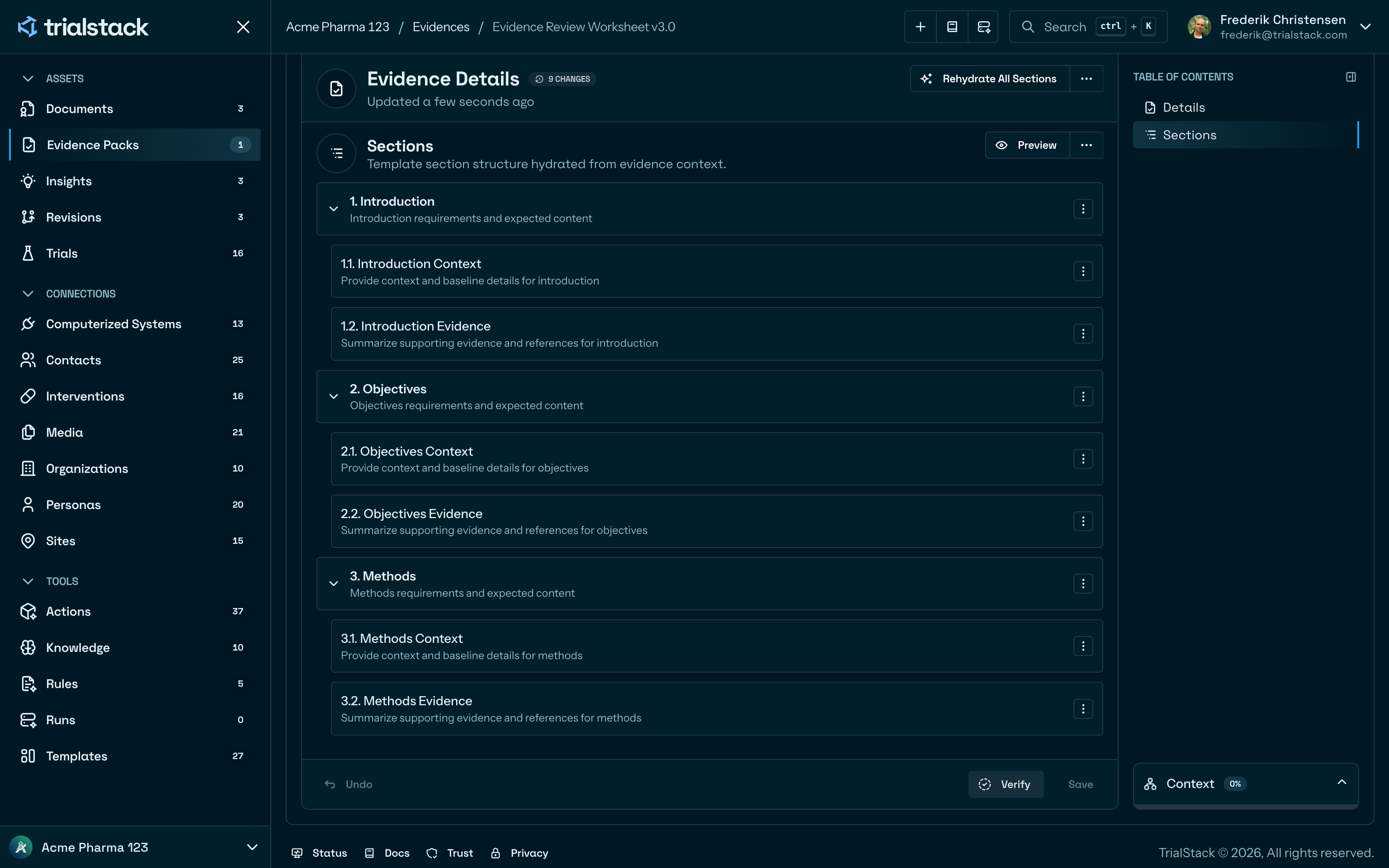
The sections surface shows the template-backed structure that gets hydrated from evidence context and then refined section by section.
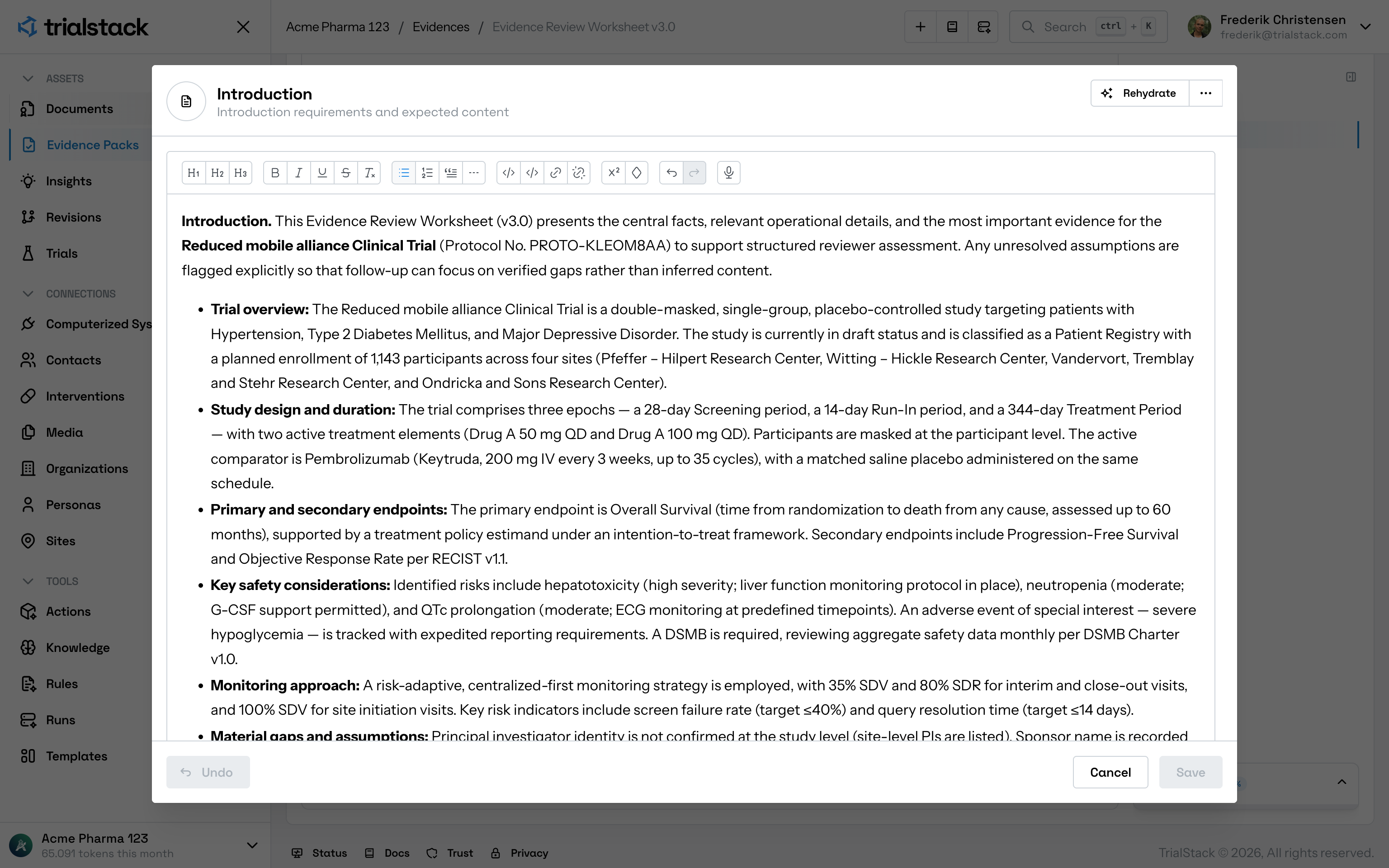
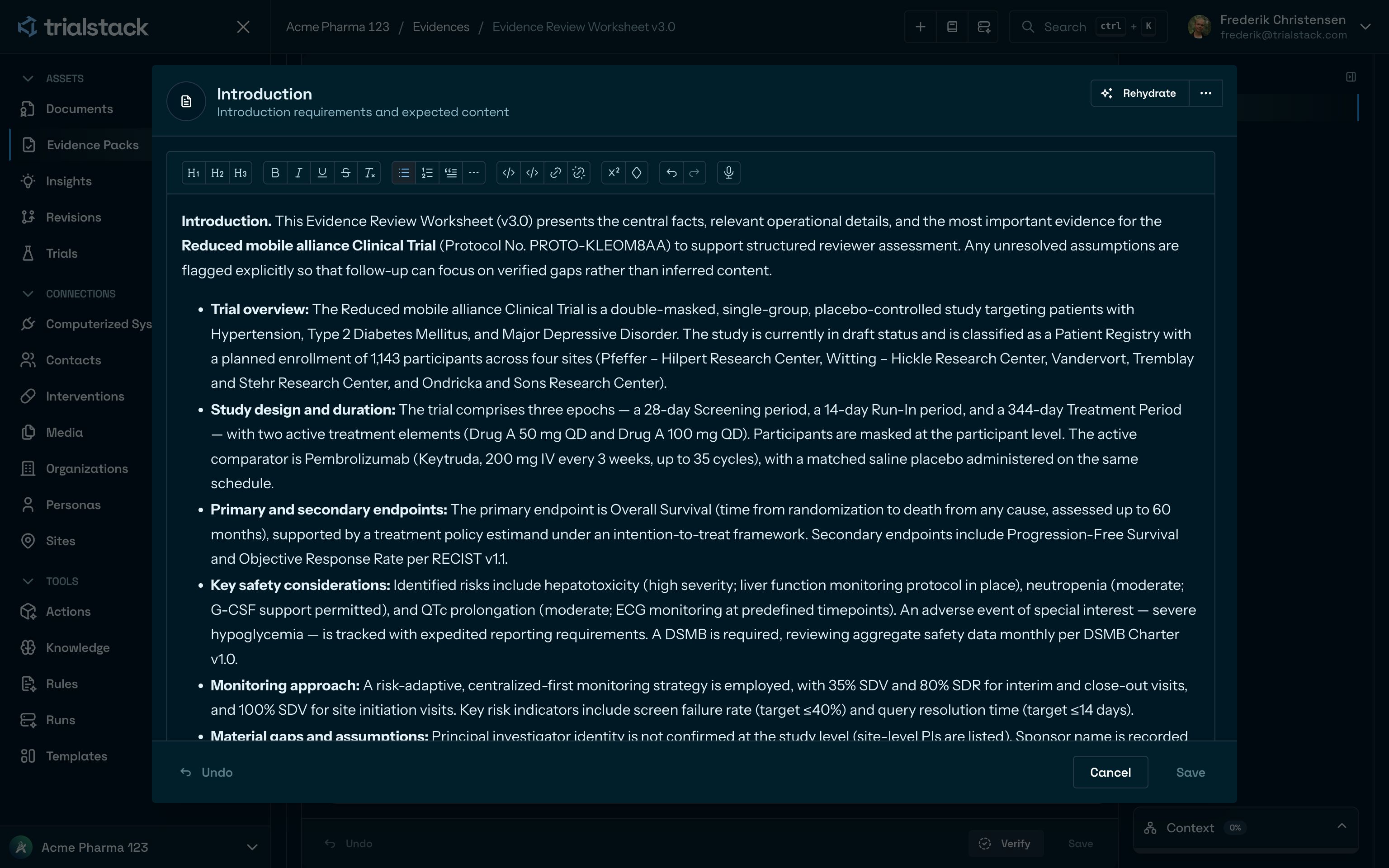
Section editing happens in a focused editor so teams can refine the package narrative without leaving the governed asset.
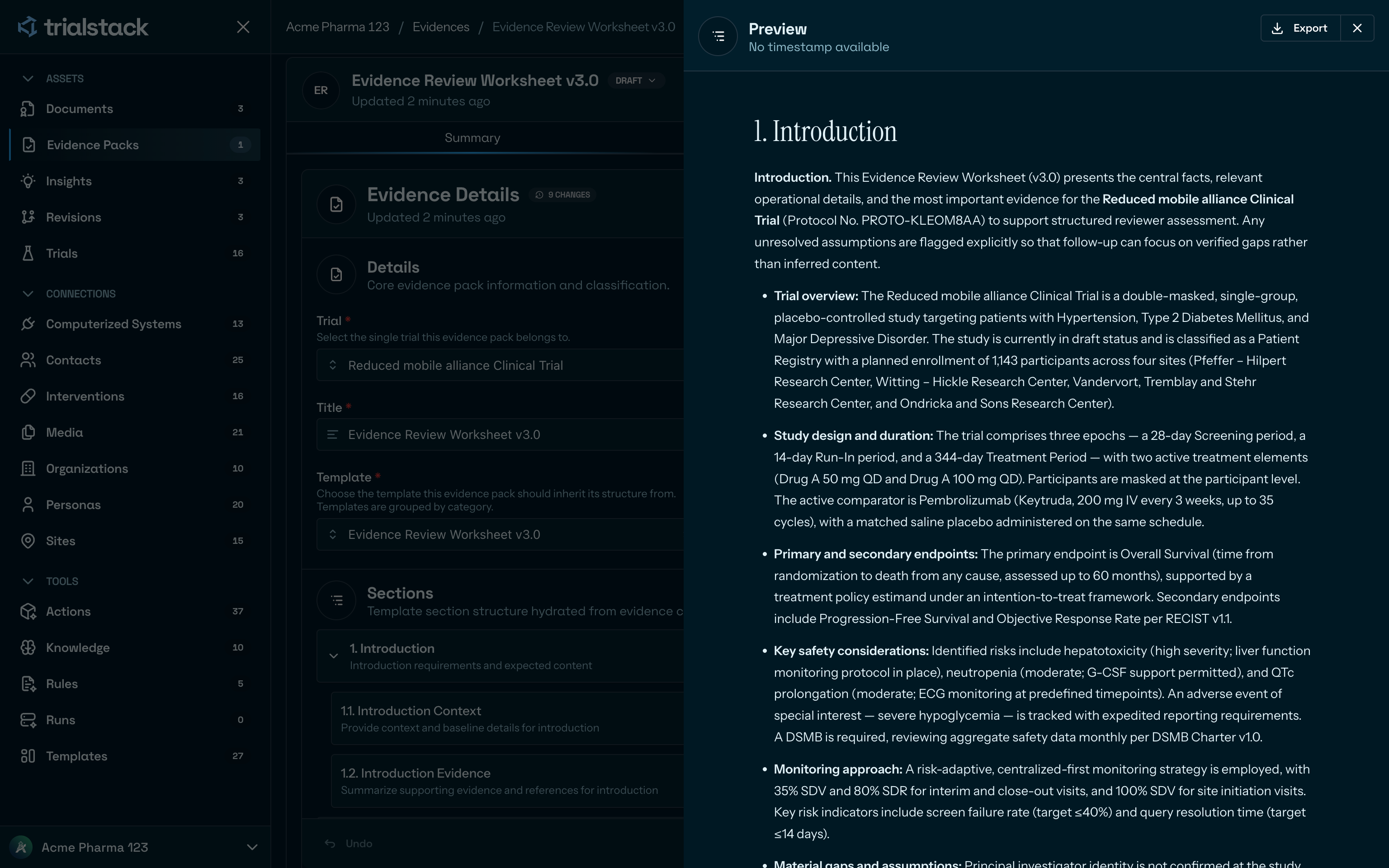
Preview lets reviewers inspect the assembled output as one readable document before export or downstream review.
Keep the package, not just the files
An evidence pack is useful when the work should be reviewed as a coherent package rather than as one standalone record or one loose folder of support material.
Use it when structure matters
Evidence packs are the right fit when:
- multiple sections need to be understood together
- a reusable template should shape the package
- linked media materially strengthens the review context
- history, compare, and restore are part of normal working practice
On the page
| Surface | Purpose | Typical content |
|---|---|---|
| Summary tab | Define the package identity and working body | Trial, title, template, language, template-backed sections |
| Insights tab | Interpret the assembled material | Derived analysis and reviewer-facing synthesis |
| Media tab | Keep source assets attached | Linked files and supporting attachments |
| Preview | Review the assembled output | Readable export-style document preview |
What teams maintain
The main form holds the pack identity rather than the whole evidence story. Teams maintain:
- the governing trial, pack title, template, and language
- the template-backed section structure
- the section content produced through hydration and manual refinement
The richer content comes from the template-backed sections, the linked media, and the review work that happens around the package rather than in one oversized header form.
Treat hydration as drafting
Hydration helps the team get to a structured draft faster. It does not remove ownership, review, or the need to refine the resulting content before the pack is trusted.