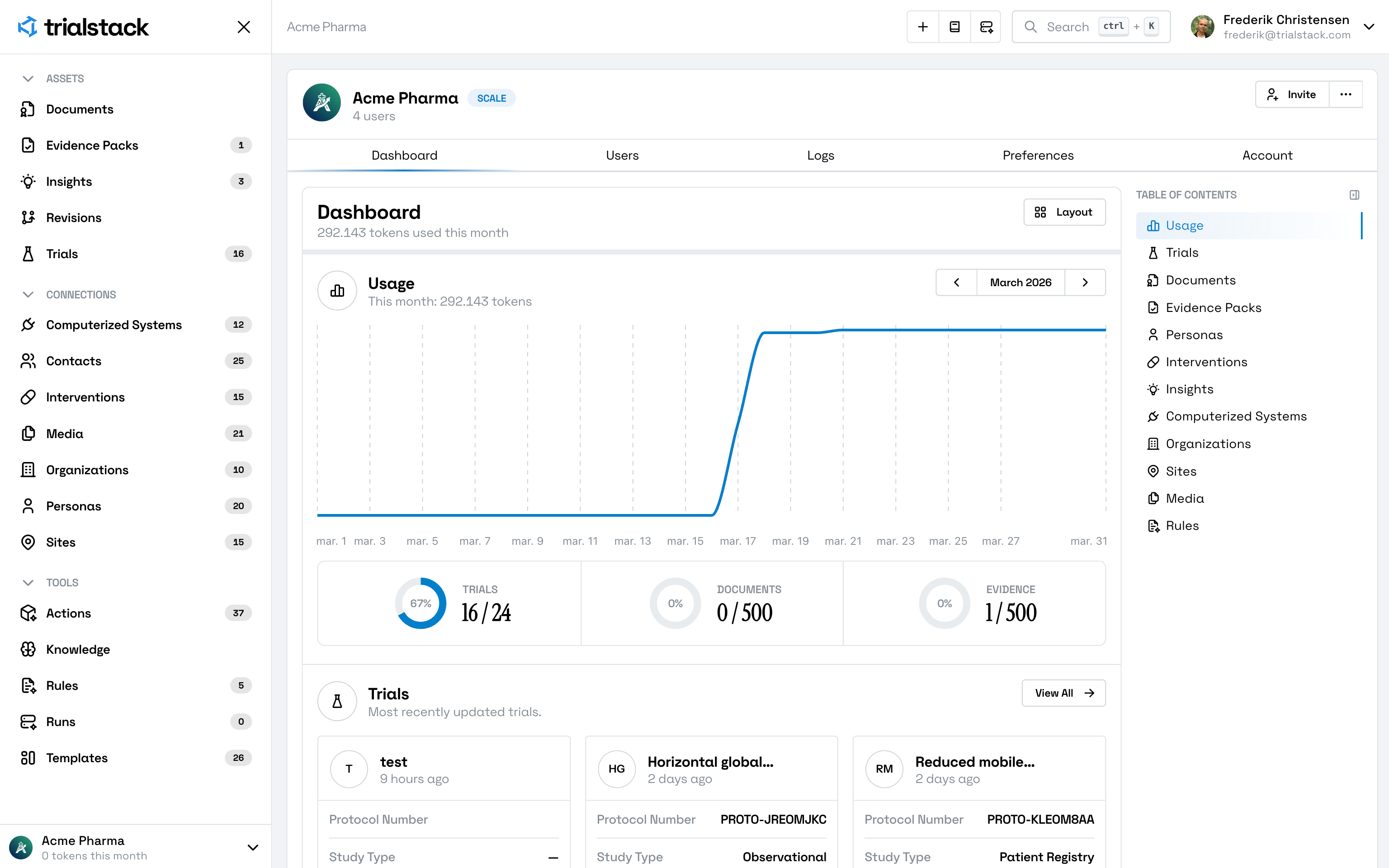
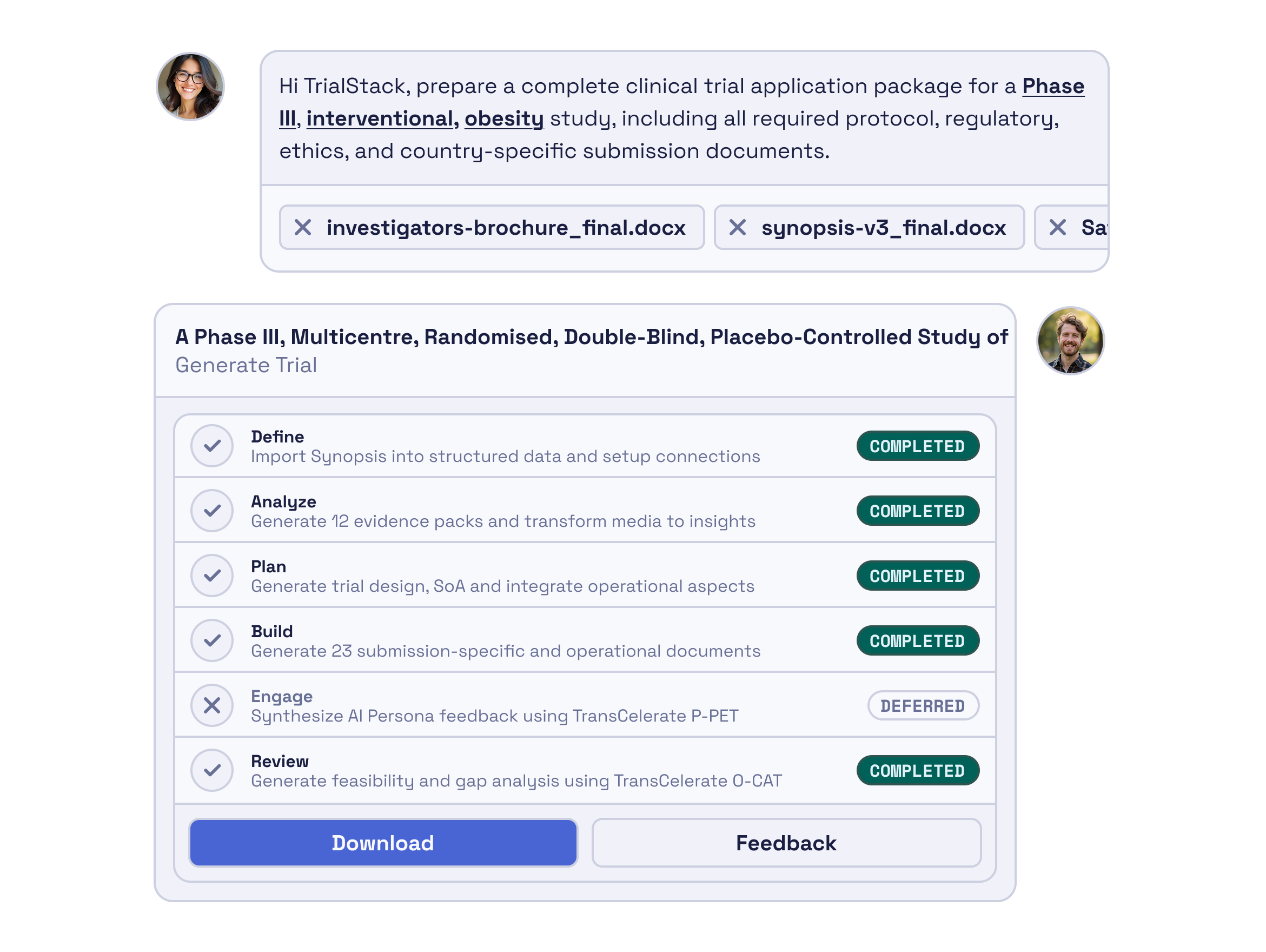
Connect compatible AI clients
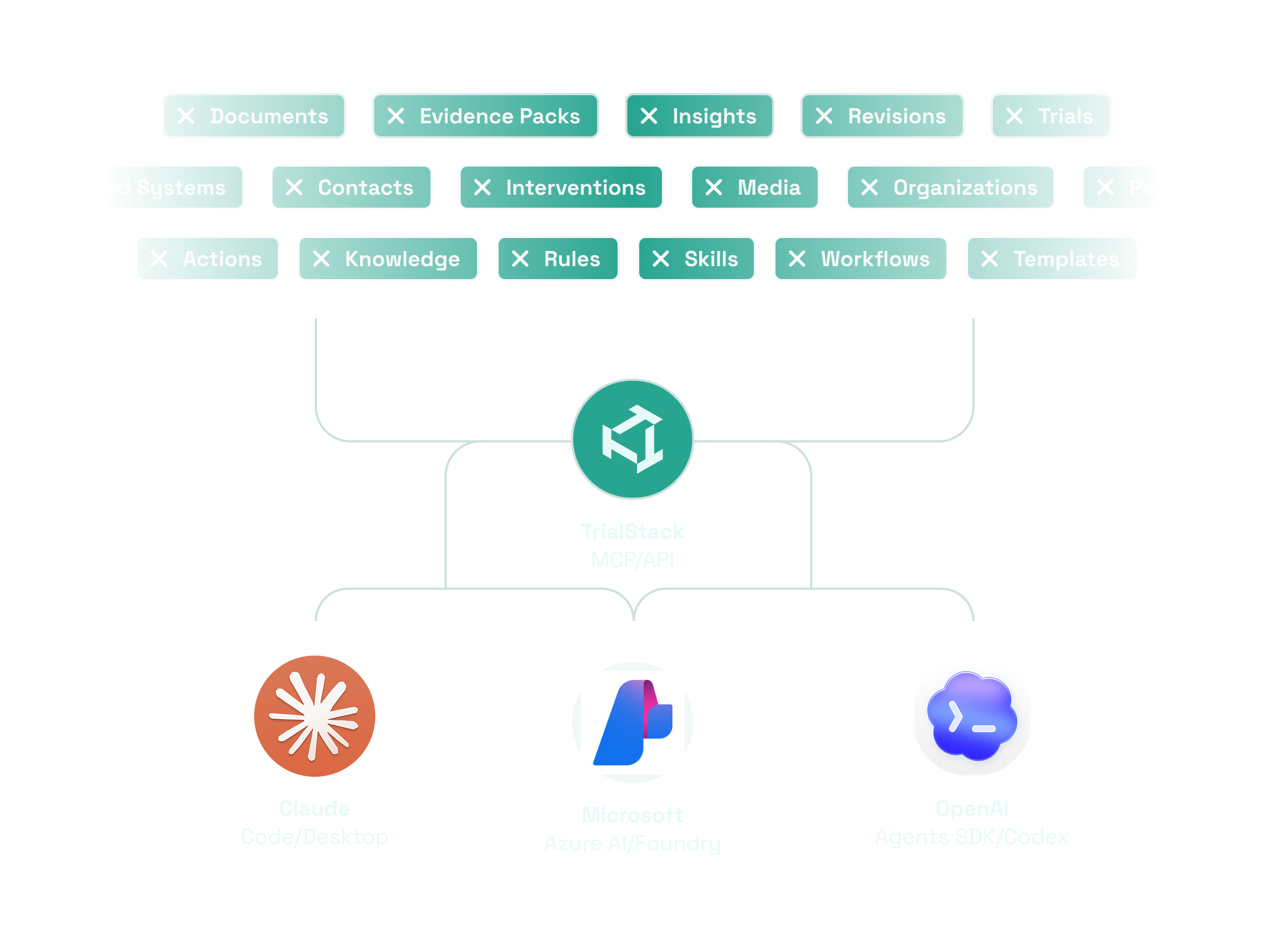
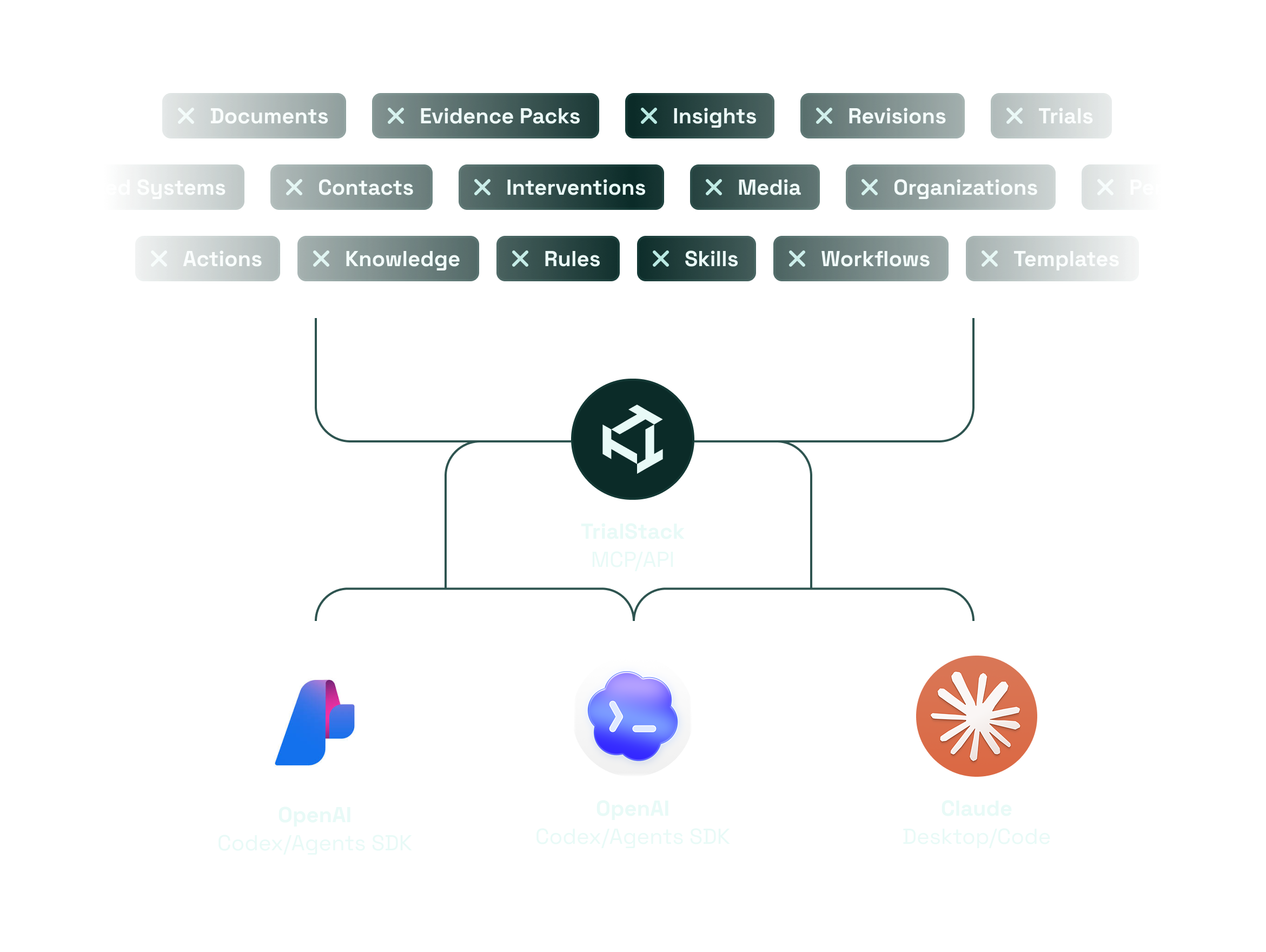
Expose approved TrialStack capabilities through a Streamable HTTP MCP endpoint.
ProductsCatalyst
Catalyst connects compatible AI clients through a capability-scoped MCP interface. Teams review and apply model output inside Studio before it becomes part of the trial record.
USE AI WITH CONTROL
Catalyst exposes capability-scoped context to compatible AI clients through MCP. Teams review and apply model output inside Studio.
Expose approved TrialStack capabilities through a Streamable HTTP MCP endpoint.
Make human review visible before generated work becomes part of the trial record.
Request, review, and apply model output where clinical teams already manage decisions, evidence, and documents.
Give teams repeatable access policies instead of isolated prompt experiments.
FAQ
Digital Data Flow replaces repeated document interpretation and manual re-entry with a machine-readable trial definition. TrialStack uses that definition to keep protocol review, document authoring and data acquisition configuration aligned.
TrialStack uses USDM as the standards-based structure for the governed trial definition, including design, objectives, endpoints, eligibility, interventions and the schedule of activities. The model remains versioned, reviewable and available for structured exchange instead of being trapped in protocol prose.
TrialStack includes a DDF-aligned Study Definition Repository around its canonical model. It retains versioned trial definitions with their decisions, lineage, review and export evidence so teams, systems and agents work from the same governed source.
TrialStack sits upstream of execution systems and does not require replacing them. Teams can create governed USDM, ODM, Viedoc, REDCap, SDTM Trial Design and ICH M11 outputs while retaining findings wherever a target cannot preserve the full trial definition.
TrialStack versions the trial definition and keeps amendments, decisions, source evidence and downstream artifacts linked to the source state that produced them. Teams can review the impact and create a new governed export without rewriting the historical record.
Get started
Keep protocol decisions, document authoring and data acquisition aligned around one trial definition. Try TrialStack Studio free for 3 days.